Buses are being re-routed from two residential streets in St.Marychurch. The press have reported it like this:
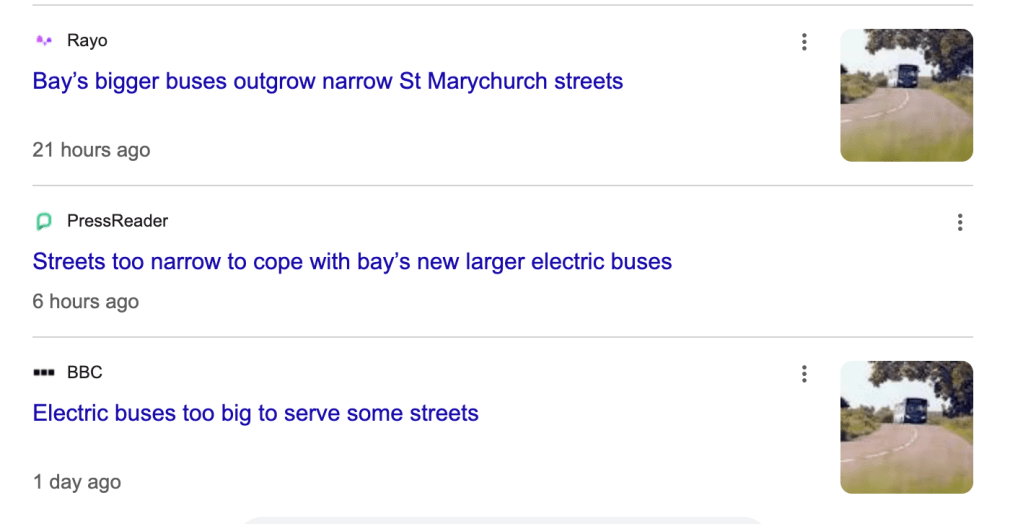
But we see it a different way…
The electric buses may be slightly bigger (we haven’t been able to get a straight answer on that). The street hasn’t changed but the new buses have been used as an opportunity to move the buses away from where people live.
Instead of enforcing against inconsiderate and illegal parking, the bus routes have been moved.
For people who are fit and able-bodied, this might sound like a manageable inconvenience.
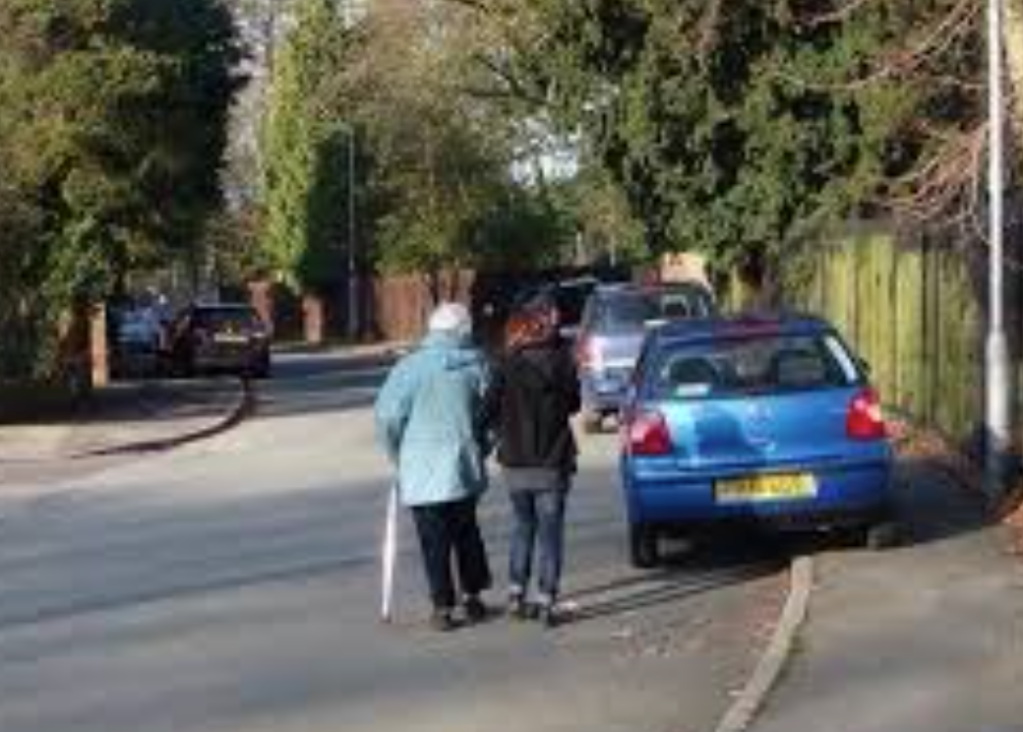
For many others, it is a serious loss of access.
Who this really affects
Longer journeys to bus stops disproportionately impact:
- disabled and mobility-impaired people
- older residents
- parents travelling with children to school or nursery
- people managing fatigue, pain or long-term health conditions
- anyone using wheelchairs, walking aids or pushchairs
For these residents, proximity to a bus stop is not optional. It is essential.
Changing routes and removing stops decides who gets to travel independently and who doesn’t.
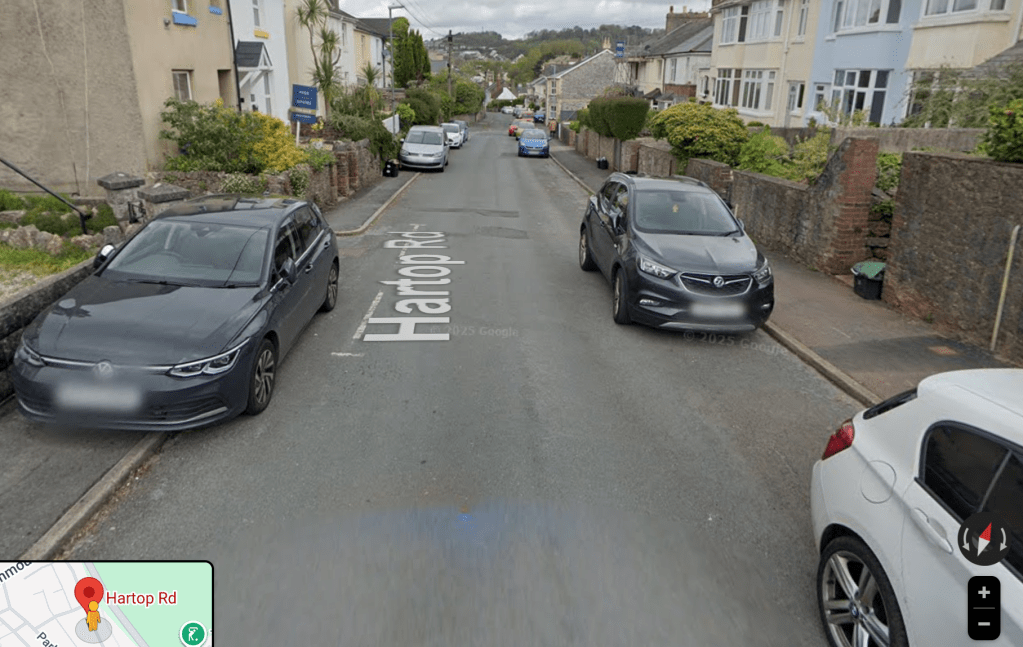
Hartop Road: the problem everyone can see
Hartop Road is a one-way residential street. Google Street View shows the issue clearly: cars parked on both sides, blocking pavements, narrowing the carriageway, and making it difficult or impossible for buses to pass.
There is simply not enough space on this street for two-sided parking and a functioning highway.
This has been true for years.
Park Road
Park Road tells a similar story — and it’s an important one.
Here, there is a physical constraint: an overhanging wall that reduces the available width of the carriageway. This may be fixable in time.
What turns it into a problem is vehicles parking opposite the wall.
When cars are allowed to park on the opposite side of the road, the usable width reduces. The result is not just inconvenience but obstruction – to buses and potentially to emergency vehicles.
Again, this is not a design failure that suddenly appeared with electric buses.
It is a management failure that has been tolerated over time.
The wall hasn’t moved.
The buses haven’t changed the street.
The lack of parking management is the issue.
A decision to avoid enforcement
Stagecoach has explained that the route changes are needed to allow new electric buses to operate “safely and reliably”.
Electric buses didn’t create this problem.
They exposed it.
If a bus cannot pass because vehicles are parked illegally – on pavements, close to junctions, or narrowing the carriageway – then the issue is not the bus. It is a failure to enforce basic highway rules.
Re-routing services avoids dealing with that failure.
The so-called “alternative route” isn’t accessible
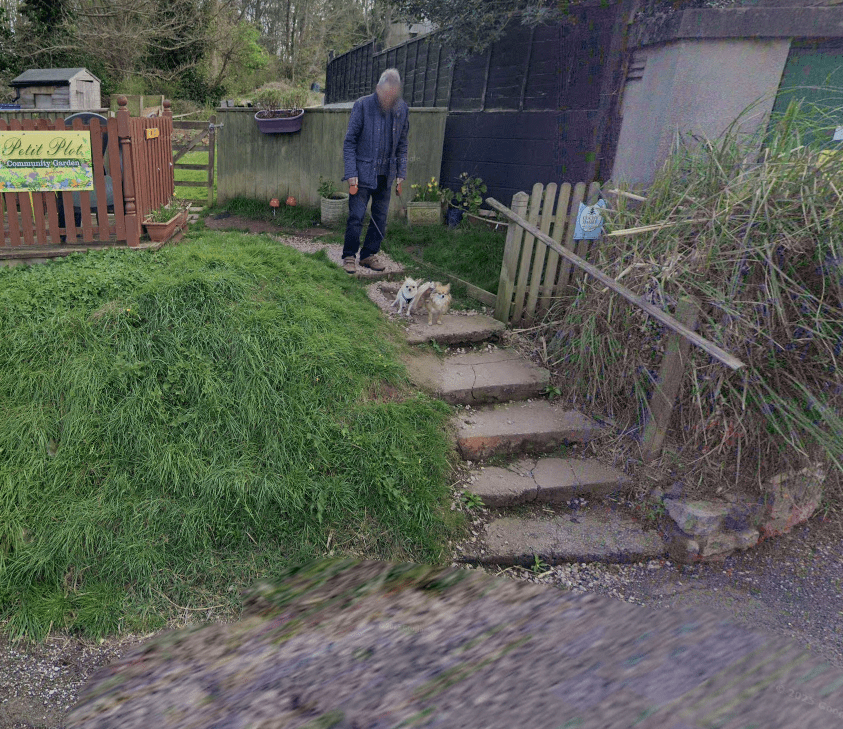
Passengers are now expected to walk between Pavor Road and St Marychurch Road. The cut-through linking them is unlit and made up of steps and uneven ground.
This route is inaccessible to many people and unsafe for others, particularly after dark. Treating it as an acceptable substitute for a changed bus route fundamentally misunderstands accessibility.
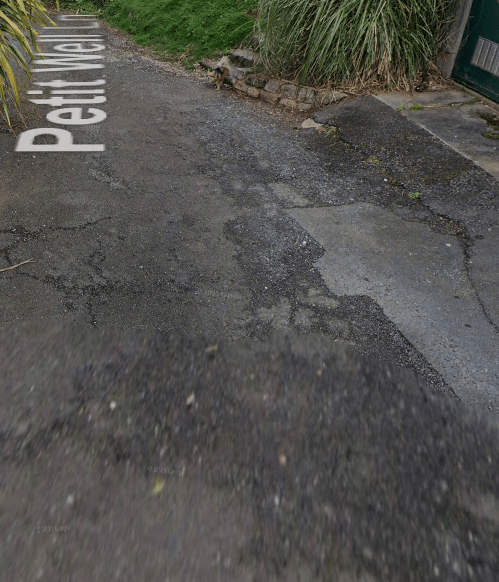
If a route cannot be used safely and independently by disabled people, parents with pushchairs, or those with limited mobility, it cannot replace a local bus stop.
Additionally, the bypass road, by its nature, is a wider and faster road. There are no controlled crossing points, and so again, vulnerable users are disadvantaged.
This is not a reasonable adjustment.
It is exclusion by design.
Bigger cars, shrinking space
There’s also a wider truth here that can’t be ignored.
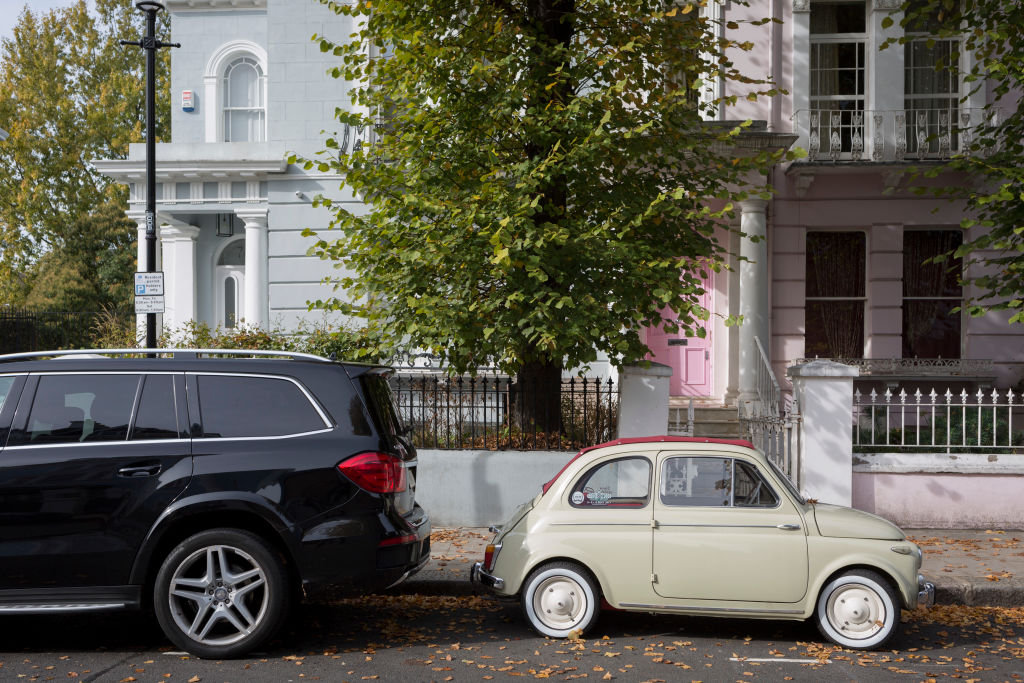
Cars are getting wider, taller and heavier. Residential streets like Hartop Road were never designed for today’s vehicle sizes, let alone two-sided parking, deliveries, through-traffic and buses all competing for space.
Congestion on these streets will increase regardless of whether buses are present.
Removing buses does nothing to solve that. It simply entrenches car dominance while making life harder for everyone else.
Let’s be clear: this is an enforcement issue
This situation does not require:
- new policies
- new consultations
- new guidance
- new infrastructure
The rules already exist.
What’s missing is the willingness to enforce them.
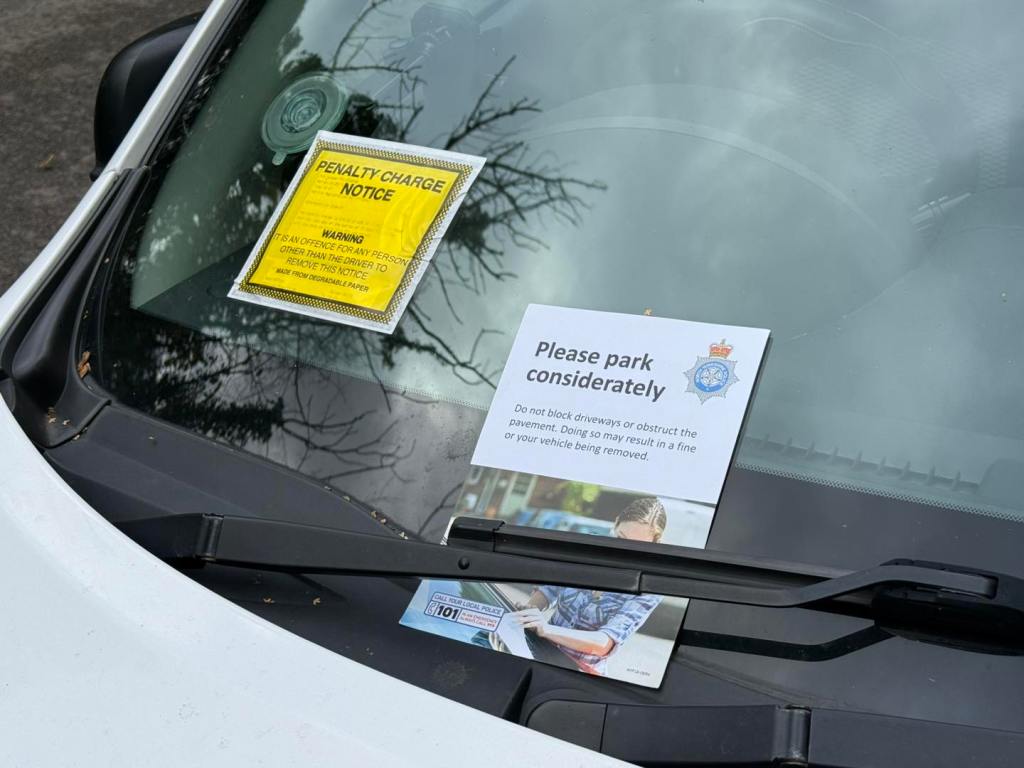
Allowing illegal parking to dictate bus routes sends a clear message:
- enforcement is optional
- accessibility is negotiable
- public transport comes second to car storage
That is a choice — not an inevitability.
Public transport should be the priority, not the casualty
If we want to reduce congestion, emissions and pressure on residential streets, the answer is not fewer buses in neighbourhoods.
It is making public transport the better option than driving.
That only happens when buses are:
- direct
- accessible
- reliable
- protected from being undermined by illegal parking
A first-class public transport system cannot exist where enforcement is absent and buses are expected to work around behaviour that would not be tolerated if it affected cars.
The real question
Is the council prepared to enforce parking rules to enable efficient public transport?
Because until it is, buses will keep being pushed out of neighbourhoods and the people who rely on them will keep paying the price.
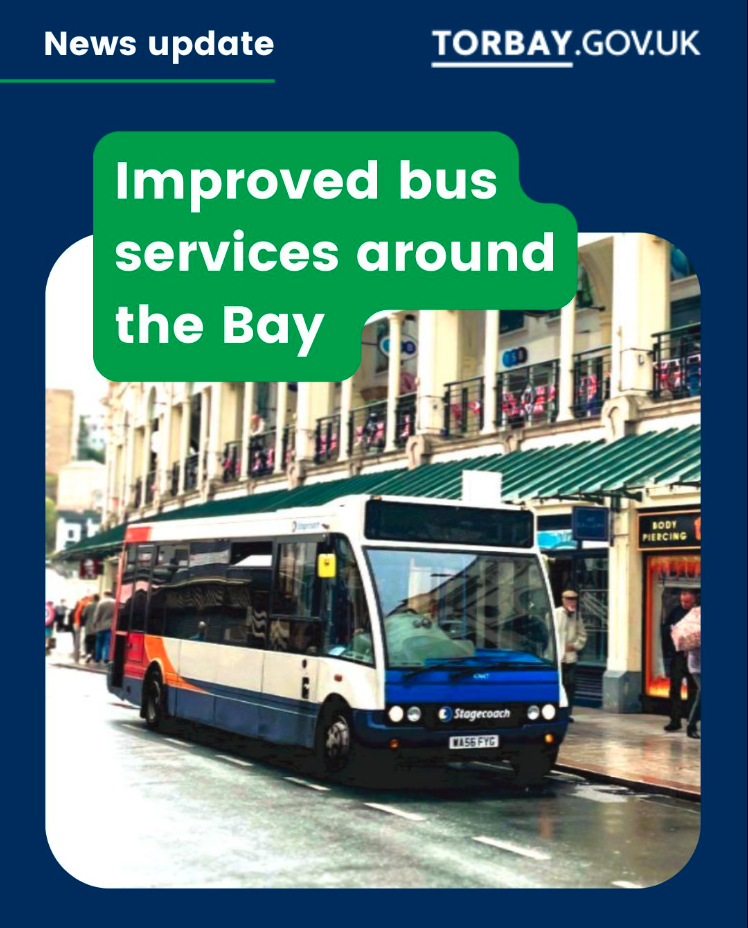
Clean buses are progress.
But clean buses diverted away from the people who need them most are not.
 Safe, Sustainable Travel Torbay
Leave a comment